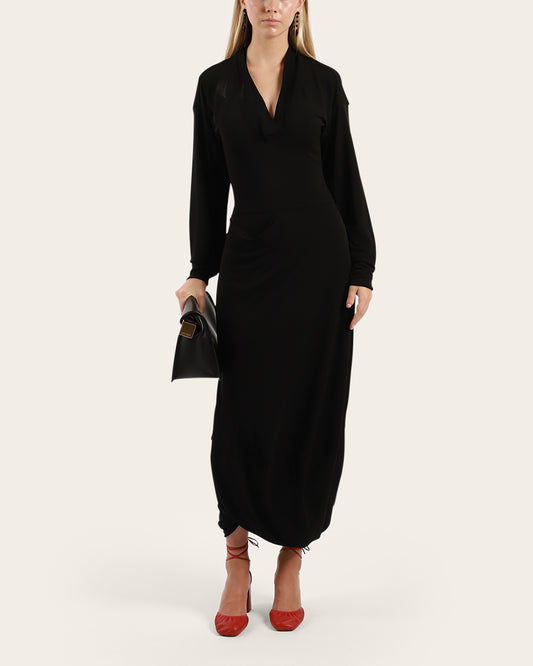
The Lemaire VocabularyLemaire has built a distinctive language around restraint, utility and everyday life. Led by Christophe Lemaire and Sarah-Linh Tran, the house looks closely at familiar garments, then adjusts their volume, construction or movement.That approach gives the dresses their character. Nothing feels added without purpose. A shifted seam, generous sleeve or unexpected fold can cha...
The Lemaire Vocabulary
Lemaire has built a distinctive language around restraint, utility and everyday life. Led by Christophe Lemaire and Sarah-Linh Tran, the house looks closely at familiar garments, then adjusts their volume, construction or movement.
That approach gives the dresses their character. Nothing feels added without purpose. A shifted seam, generous sleeve or unexpected fold can change the entire silhouette, often with the subtlety that makes Lemaire interesting in the first place.
Fabric Does the Work
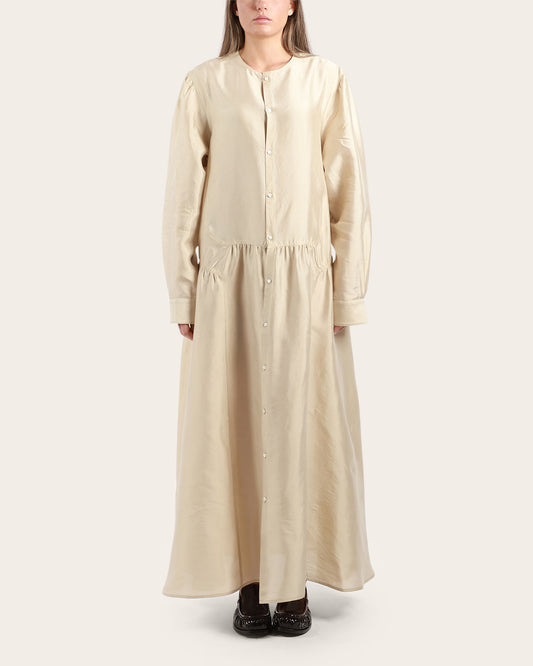
Cotton poplin, fluid viscose, silk blends, wool and other seasonal fabrics appear throughout the collection. Rather than treating material as a backdrop, Lemaire uses its weight and drape to shape each garment.
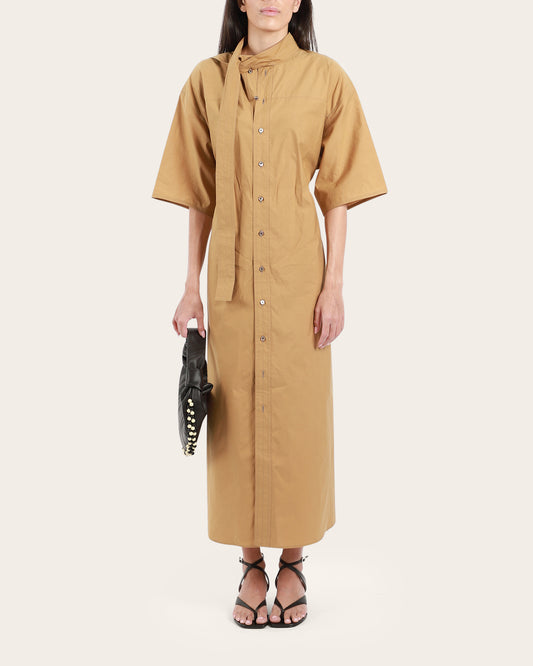
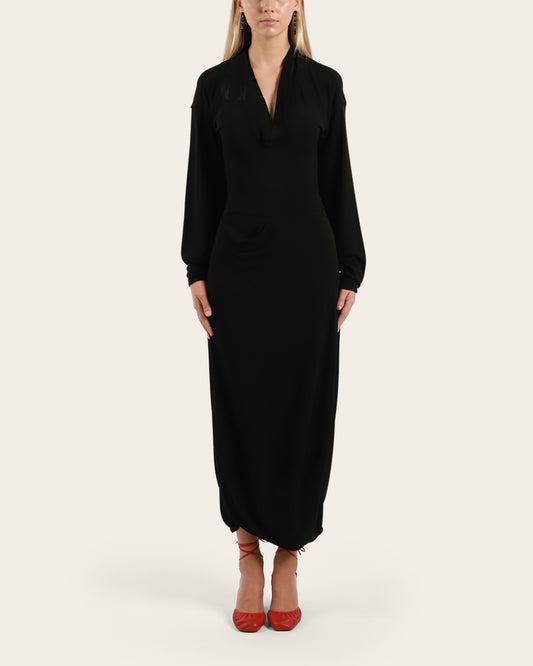
The Twisted Dress is a particularly recognisable expression of this thinking. Fabric wraps and gathers around the body to create asymmetric movement without relying on embellishment. Other styles favour elongated lines, soft volume and practical detailing.
How to Wear Lemaire Dresses
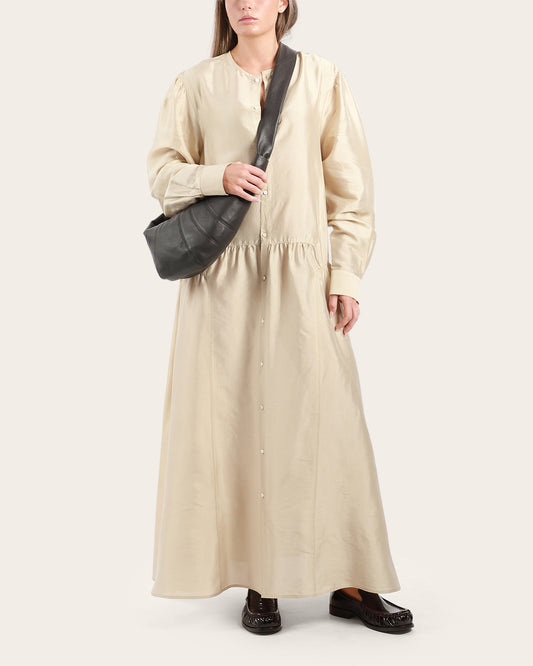
The appeal of a Lemaire dress lies in how little it asks of the wearer. Add flat leather shoes and a simple bag for daytime. In cooler weather, a knit or coat brings another layer without disrupting the silhouette.
There is also room to play with proportion. A fluid dress can sit over Lemaire pants, while a more open style works with fitted Lemaire tops underneath. The result should feel instinctive rather than overly arranged.
Quietly Directional
Lemaire operates outside the usual divide between statement dressing and minimalism. Its clothes are restrained, but never anonymous. Much of their personality emerges through construction and movement.
Within a broader edit of designer dresses, that subtlety is precisely the point. These are pieces that reveal more through wear than they do at first glance.
Sizing Guide
Lemaire generally follows European sizing for women’s ready-to-wear.
| Size |
AU |
US |
EU |
IT |
Denim |
| XXS | 4 | 0 | 32 | 36 | 23 |
| XS | 6 | 2 | 34 | 38 | 24–25 |
| S | 8 | 4 | 36 | 40 | 26–27 |
| M | 10 | 6 | 38 | 42 | 27–28 |
| L | 12 | 8 | 40 | 44 | 29–30 |
| XL | 14 | 10 | 42 | 46 | 31–32 |
| XXL | 16 | 12 | 44 | 48 | 32–33 |
| XXXL | 18 | 14 | 46 | 50 | 34 |
Begin with your usual size. Some silhouettes are deliberately loose or asymmetric, so consider the intended cut and fabric rather than sizing down automatically.
Caring for the Fabric
Care varies with fabrication. Delicate silk, wool and structured pieces may require professional dry cleaning, while some cotton styles allow gentler at-home care. Store dresses away from prolonged sunlight and follow the individual garment label.
Finding the Right Silhouette
Look first at how you like a dress to move. Twisted and wrapped styles create shape through drape, while shirt dresses offer a cleaner, more utilitarian line. For versatility, consider a silhouette that works with both flat shoes and more polished accessories. Lemaire is at its best when the piece settles naturally into an existing wardrobe.